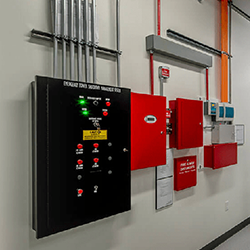
ELV System
An ELV (Extra-Low Voltage) system refers to electrical systems that operate at low voltages, typically below 50V AC or 120V DC. These systems are widely used in buildings for communication, safety, and automation purposes. ELV systems are separate from the main power distribution and do not carry high voltage, making them safer to install and maintain.
Common ELV systems include CCTV, fire alarm systems, public address (PA) systems, data networks, access control, intercom, building management systems (BMS), and lighting control. These systems enhance security, communication, and operational efficiency in residential, commercial, and industrial buildings.
ELV systems are usually designed and installed during the building construction phase and require structured cabling, racks, panels, and control units. Integration with IT and automation platforms is increasingly common, especially in smart buildings.
The main benefits of ELV systems are safety, low power consumption, cost-efficiency, and ease of integration. As technology advances, ELV systems are playing a key role in supporting IoT, smart city infrastructure, and green building initiatives.